EMERGENCY WATER EXTRACTION • ACWORTH, GEORGIA
Emergency Water Extraction in Acworth, GA
Standing water in your Acworth home has to come out fast. Our crew removes water from carpet, hardwood, tile, finished basements and subfloors across ZIP codes 30101 and 30102, using extractors that pull far more water than any shop vac. Call now and a crew is dispatched immediately, day or night, before water wicks into walls and mold gets a start.
Request Emergency Help
Fill this in and we will call you back. For immediate help, call (470) 672-2095.
How quickly does standing water have to come out of an Acworth home?
Within the first few hours. After 24 to 48 hours, drywall wicks water upward, wood swells and Acworth's humidity gives mold everything it needs to start growing.
Time changes the whole job. Clean water from a supply line is Category 1 when it starts, but after a day or two sitting on carpet and subfloor it can turn into Category 2 or even Category 3, which means more materials have to be removed instead of dried. Fast emergency water extraction in Acworth, GA keeps the job small: less demolition, shorter drying and a lower chance of mold behind baseboards and under flooring.
What does emergency water extraction in Acworth include?
Every extraction visit follows the same order so no water is left hiding:
- Dispatch: A crew is dispatched immediately with extraction and drying equipment.
- Safety check: Power to wet rooms is checked, and the water source is stopped or isolated.
- Moisture mapping: Thermal imaging and moisture meters show how far water traveled under floors and into walls.
- Bulk extraction: Standing water is pulled out of carpet, pad, hard floors and low spots.
- Weighted extraction on carpet: Carpet and pad are compressed while extracting to squeeze out trapped water.
- Subfloor water removal: Water under flooring and in cavities is reached with specialty tools.
- Drying setup: Dehumidifiers and air movers go in the same visit, so drying starts as soon as extraction ends.
- Structural drying continues for the next several days with daily moisture readings. See water mitigation and structural drying in Acworth
Truck-mounted extraction vs. portable extraction units
Not every Acworth home calls for the same machine. The crew picks the equipment based on how much water there is and where it sits.
| Equipment | Best for | Why it's used |
|---|---|---|
| Truck-mounted extraction | Large losses, several rooms, flooded basements | Highest suction power; the unit stays outside while hoses run inside |
| Portable extractors | Upstairs rooms, condos, tight spaces | Carried room to room where hoses can't reach easily |
| Submersible pumps | Deep standing water, crawl spaces, garages | Moves large volumes quickly before fine extraction |
| Weighted (ride-on) extractors | Wet carpet and pad | Presses water out of pad that surface wands leave behind |
Truck-mounted extraction is usually the fastest way to handle a full basement or several rooms at once, while portable units cover second floors and smaller spaces.
Can a wet vac replace professional extraction?
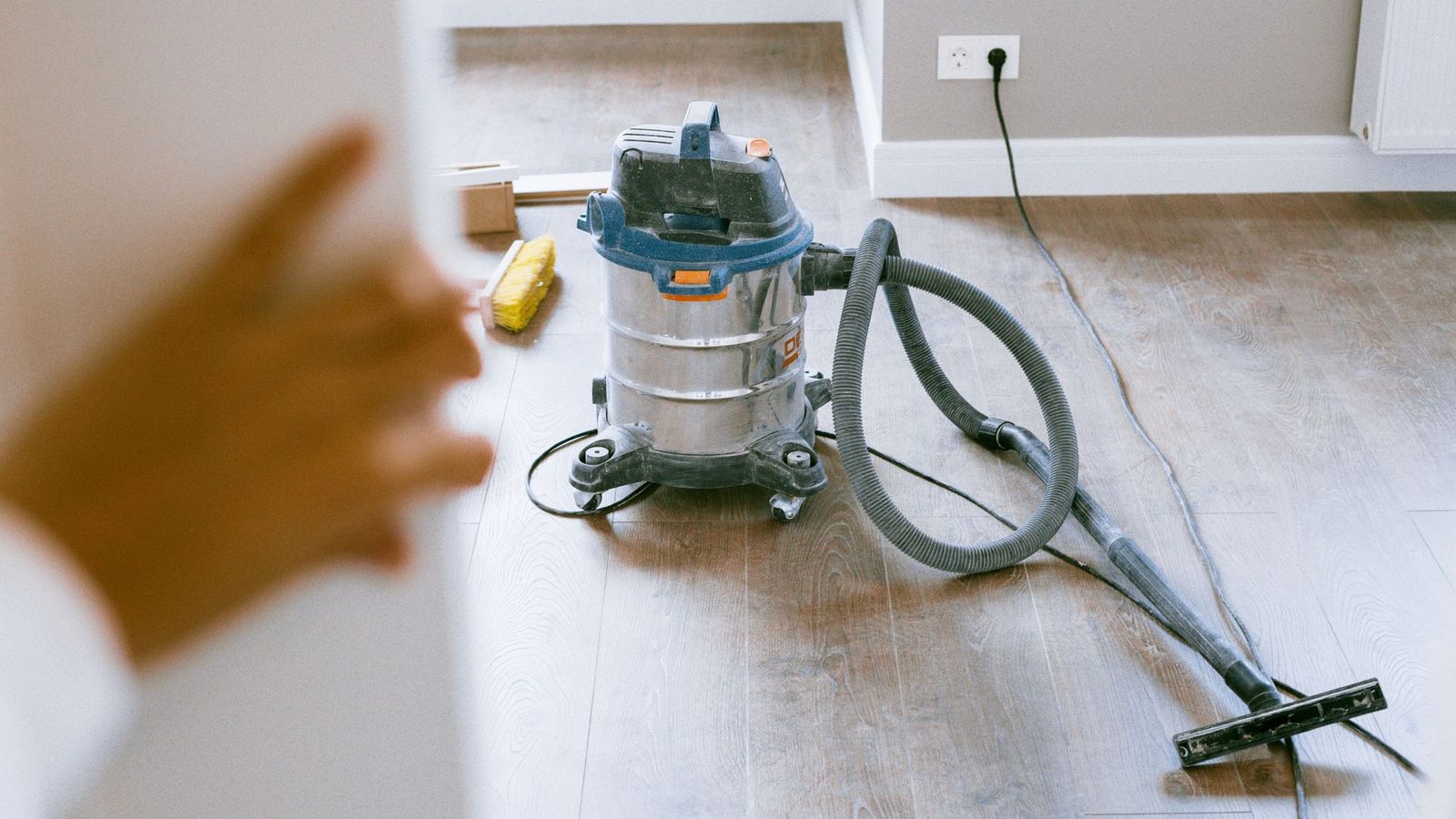
For a small spill on tile, a shop vac helps. For anything that soaked carpet, ran under flooring or reached a wall, the answer to wet vac vs professional extraction usually comes down to what you can't see:
- A wet vac pulls surface water but leaves most of the water held in carpet pad.
- It can't reach water trapped under hardwood, laminate, LVP or tile.
- It doesn't show where water traveled inside walls.
- Household vacuums are not made for gray water or sewage and can spread contamination.
- Surface-dry carpet can still be wet underneath and start smelling within days.
- Professional extraction removes the bulk water and then proves the space is dry with moisture readings.
Subfloor water removal and hidden water
The water you see is rarely all of it. In Acworth homes, water often runs under vinyl plank floors, into the gap under cabinets and along the bottom plates of walls. Subfloor water removal uses floor drying mats, injection drying for wall cavities and targeted airflow under raised flooring.
When subfloor water removal is skipped, the floor can look dry while the plywood or OSB underneath stays wet, leading to cupping, soft spots and odor weeks later.
Water extraction for different Acworth home layouts
Split-level and walkout basement homes
Many Acworth homes are built into sloped lots, especially in 30101 neighborhoods like Brookstone and Cedarcrest and along the lake. Water flows to the lowest level, so extraction usually starts there and works upward.
Two-story homes with upstairs laundry
When an upstairs washer or bathroom leaks, water travels through the floor into the ceiling below. Both levels need extraction and drying, plus a check of the ceiling cavity.
Slab-on-grade homes
On a slab, water spreads wide and fast under flooring. Extraction focuses on pulling water from under floor coverings and along wall bases.
Crawl space homes
Water that drains through the floor ends up in the crawl space. Standing water there is pumped out so moisture doesn't rise back into the house. See crawl space water removal in Acworth
Water extraction across Acworth 30101 and 30102
The crew handles water extraction in Acworth from downtown and Lake Acworth to McEver Road, Cedarcrest Road and Cobb Parkway in 30101, and out along Bells Ferry Road, Highway 92 and the Lake Allatoona shoreline in 30102, including homes in unincorporated Cherokee County. Whether it's a townhome near downtown, a lake home with a walkout basement or a manufactured home off Bells Ferry, water removal in Acworth, GA starts with the same immediate dispatch.
Common sources of standing water in Acworth homes
- Burst or frozen supply lines in attics and crawl spaces. See burst pipe water damage in Acworth
- Failed water heaters in basements and garages. See water heater leak cleanup in Acworth
- Washing machine, dishwasher and ice maker lines. See appliance leak water damage in Acworth
- Sump pump failure during heavy rain. See flooded basement cleanup in Acworth
- Sewer backups through floor drains and toilets. See sewage backup cleanup in Acworth
- Storm water and rising creeks. See flood damage restoration in Acworth
What should you do before the extraction crew arrives?
- Shut off the water at the main shut-off or the appliance valve.
- Turn off power to wet rooms if the breaker is safe to reach.
- Photograph every wet area for insurance.
- Move electronics, rugs, papers and small furniture to a dry room.
- Put foil or wood blocks under furniture legs sitting in water.
- Stay out of water that may contain sewage.
- Don't use a regular household vacuum on wet floors.
How much does water extraction cost in Acworth?
Cost depends on how much water there is, the category of water and how many rooms it reached. A small, single-room cleanup is usually at the lower end, while a typical Acworth job that includes extraction and several days of drying often lands around $1,400 to $3,800. Large basement losses, sewage or jobs that need rebuilding can run much higher.
What moves the price:
- Square footage and number of rooms affected
- Clean water vs. gray water vs. sewage
- Carpet and pad that must be removed
- Days of drying equipment needed
- Whether subfloor water removal or wall cavity drying is needed
Will insurance pay for standing water removal in Acworth?
Most Georgia homeowners policies cover sudden and accidental water, like a burst pipe or failed water heater, including standing water removal and drying. Outside floodwater usually needs a separate flood policy. Photos, moisture readings and daily drying logs from the job support your claim. If the leak was on your side of the meter, Cobb County Water System may also offer a partial leak credit on your water bill with a repair receipt. See water damage insurance claim help in Acworth
Emergency Water Extraction FAQs
How fast can a crew start standing water removal in Acworth?
A crew is dispatched immediately after your call, 24/7, including nights, weekends and holidays, anywhere in Acworth 30101 and 30102.
How long does water extraction take?
Extraction itself usually takes a few hours, depending on how many rooms are wet. Drying continues for about 3 to 5 days afterward with equipment running.
Can my carpet be saved after extraction?
Carpet wet with clean water can often be saved if extraction starts quickly. The pad underneath is usually replaced. Carpet soaked with sewage is removed.
Do I need to leave my home during extraction?
Usually not for clean water. With sewage or heavy contamination, it's safer to stay out of the affected area until it's cleaned.
What happens after the water is extracted?
Dehumidifiers and air movers are set up, moisture is checked daily, and any materials that can't be dried are removed. Repairs follow once everything is dry. See water damage repair in Acworth
Standing water in your Acworth home right now?
Every hour counts. Our emergency water extraction crew in Acworth, GA is ready 24/7 for burst pipes, flooded basements, appliance leaks and storm water across 30101 and 30102. Call (470) 672-2095 and a crew is dispatched immediately.
Call (470) 672-2095 now for water damage in Acworth, GA 30101 and 30102. A crew is dispatched immediately.
(470) 672-2095Water in your Acworth home right now?
Don't wait for it to spread. Our 24/7 water damage restoration crew in Acworth, GA is ready for burst pipes, flooded basements, sewage backups and storm leaks across 30101 and 30102. Call (470) 672-2095 now and a crew is dispatched immediately for emergency water damage in Acworth, from first extraction to final repair.