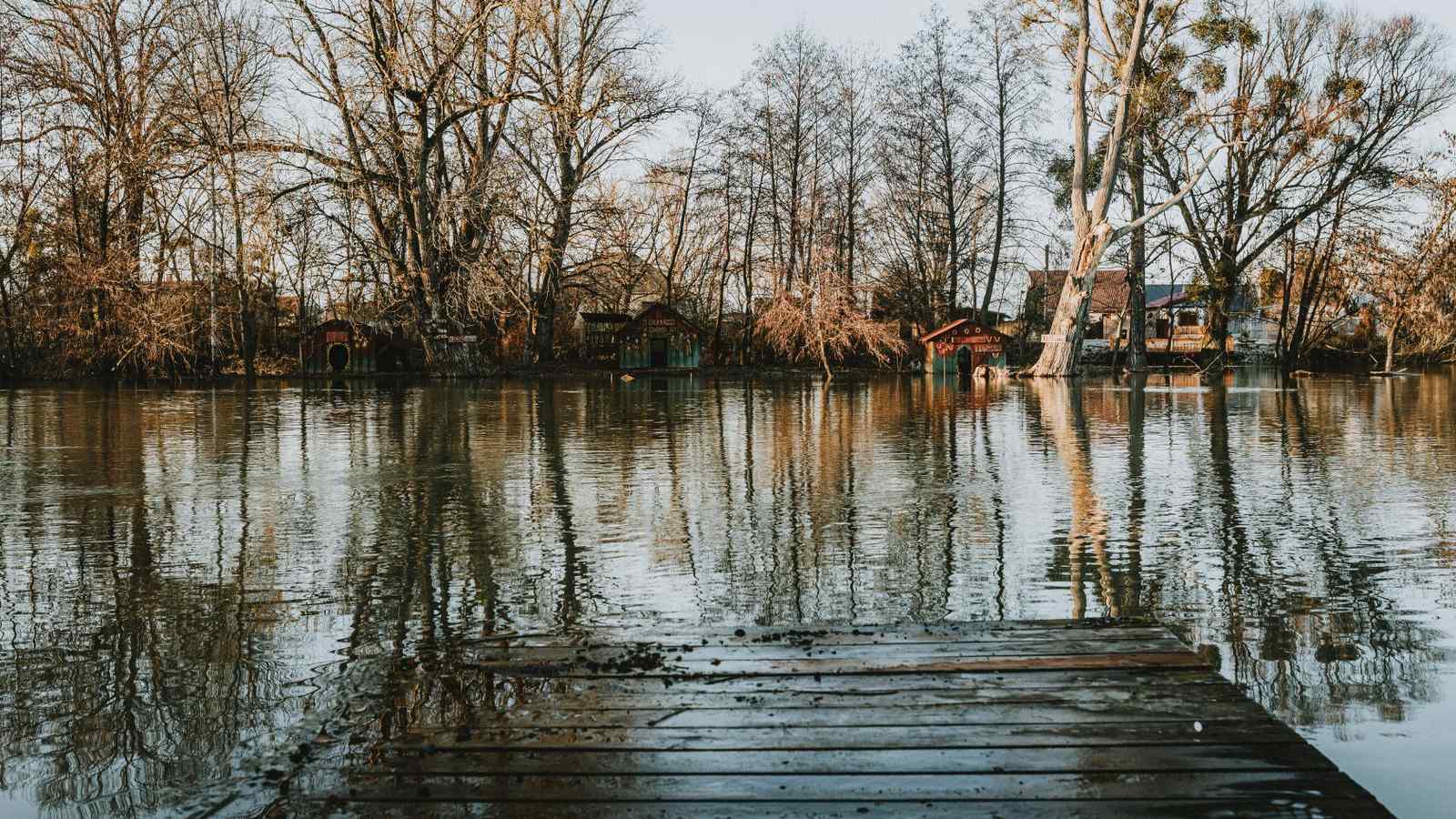
LAKE ALLATOONA FLOODING • ACWORTH, GEORGIA
Lake Allatoona High Water: A Basement Checklist for Acworth Homes
Acworth calls itself "The Lake City" for good reason, but living near Lake Allatoona and its creeks means paying attention when the water rises. The lake is managed by the U.S. Army Corps of Engineers, and after long stretches of heavy rain it can sit far above normal for weeks. Here's what has happened before, how to track the lake and creeks, and how to protect your basement when the water comes up.
How high can Lake Allatoona get?
After prolonged heavy rain, Lake Allatoona has risen more than 18 feet above its normal level, flooding roads like Tanyard Creek Road near Acworth.
Allatoona Lake was authorized by the Flood Control Acts of 1941 and 1946, and Allatoona Dam on the Etowah River was completed in 1949. One of its jobs is storing floodwater, which means that after big storms the Corps holds water back in the lake to protect communities downstream. WSB-TV reported one event where the lake sat about 11 feet above normal at 851 feet, and later more than 18 feet higher than normal, with Tanyard Creek Road, a main route from Acworth to I-75, underwater and Old Stilesboro Road shut down over concerns about Allatoona Creek.
Quick Answers
- Who manages the lake
- U.S. Army Corps of Engineers
- Dam
- Allatoona Dam on the Etowah River, completed in 1949
- Key creek gauge
- Allatoona Creek at Stilesboro Road near Acworth (NWS); flood stage is 13 feet
- Roads that have flooded
- Tanyard Creek Road, Old Stilesboro Road
- Biggest basement risk
- saturated ground pushing water through walkout and block walls
- First move
- check your sump pump and move belongings off the floor before the water peaks
Creek flooding around Acworth
Lake Allatoona isn't the only concern. The creeks that feed it can rise fast. In September 2009, U.S. Geological Survey stream gauges on Allatoona, Noonday and Butler Creeks, all tributaries to Allatoona Lake, recorded peak flows far greater than a 500-year flood. The National Weather Service in Peachtree City has issued flood warnings for Allatoona Creek at Stilesboro Road several times since, including warnings in February 2023 and January 2024, and the Cobb County Courier has photographed flooding behind Riverview Landing.
The NWS gauge at Stilesboro Road reaches flood stage at 13 feet, when minor flooding begins. When warnings are issued, low-lying areas, poor drainage spots and homes near the creeks are the first affected.
How to track lake levels and flood warnings
- Lake level
- the U.S. Army Corps of Engineers posts current Allatoona Lake elevation online.
- Creek levels
- the USGS and NWS publish real-time readings for Allatoona Creek near Acworth.
- Warnings
- sign up for National Weather Service alerts and Cobb County emergency alerts.
- Local news
- the Cobb County Courier and Atlanta TV stations report road closures.
Why high water reaches basements that never flood from the lake
Most basement water during high-lake periods doesn't come over the shoreline. It comes up through the ground. When the lake is high and the creeks are full, the water table rises and the soil around your home stays saturated for weeks. That water presses against basement walls, especially the buried uphill side of a walkout, and finds its way through block, cracks and the joint where the wall meets the floor.
The high-water basement checklist
- Before the water rises
- Test your sump pump by pouring water into the pit.
- Add a battery backup pump or have a generator plan.
- Clear gutters and extend downspouts well away from the foundation.
- Move stored items off the basement floor and onto shelves.
- Check window wells for drains and covers.
- Photograph your basement for a before record.
- While the lake is high
- Check the basement daily, especially along the uphill walls.
- Watch the sump pit and listen for the pump.
- Run a dehumidifier to keep humidity down.
- Look for damp spots, efflorescence and wet carpet near walls.
- If water gets in
- Stay out if power outlets or cords are near the water.
- Photograph everything.
- Get extraction and drying started right away.
Flood insurance and lake homes
Standard homeowners policies exclude flooding, including surface water and rising lake or creek water. Flood coverage, often through the National Flood Insurance Program, covers that risk but usually has a waiting period before it starts, so it has to be in place before high water. Groundwater seepage is a gray area under many policies, so check yours carefully.
Vacant lake homes during high water
Second homes along the lake are at extra risk, because nobody is there to notice water coming in. A neighbor check, a leak sensor with phone alerts and a working sump with a backup pump can catch a problem before it becomes a full lower-level flood. See Lake Allatoona water damage restoration
After the water: dry it fast
If water got into your basement, mold can start within 24 to 48 hours on wet drywall, carpet and wood. Outside water is treated as contaminated, so carpet, pad and lower drywall are usually removed and everything is sanitized before drying. See flooded basement cleanup in Acworth
FAQs
Where can I check Lake Allatoona's level?
The U.S. Army Corps of Engineers posts the current Allatoona Lake elevation online, and USGS publishes nearby gauge data.
What is flood stage for Allatoona Creek?
At the NWS gauge on Stilesboro Road near Acworth, flood stage is 13 feet.
Will my homeowners policy cover lake flooding?
Usually not. Lake and creek flooding generally needs a separate flood policy.
Lake water in your basement?
Don't wait for it to recede. Crews are dispatched immediately, 24/7, for lake homes and basements across Acworth 30101 and 30102. Call (470) 672-2095.
Call (470) 672-2095 now for water damage in Acworth, GA 30101 and 30102. A crew is dispatched immediately.
(470) 672-2095Water in your Acworth home right now?
Don't wait for it to spread. Our 24/7 water damage restoration crew in Acworth, GA is ready for burst pipes, flooded basements, sewage backups and storm leaks across 30101 and 30102. Call (470) 672-2095 now and a crew is dispatched immediately for emergency water damage in Acworth, from first extraction to final repair.
Request Emergency Help
Fill this in and we will call you back. For immediate help, call (470) 672-2095.